Outpacing Rivals: A Comparative Guide to Modern Motor Controller Strategies
Introduction — Why the Right Motor Controller Changes Everything
Have you ever watched a production line stutter and thought, “There has to be a smarter way”?
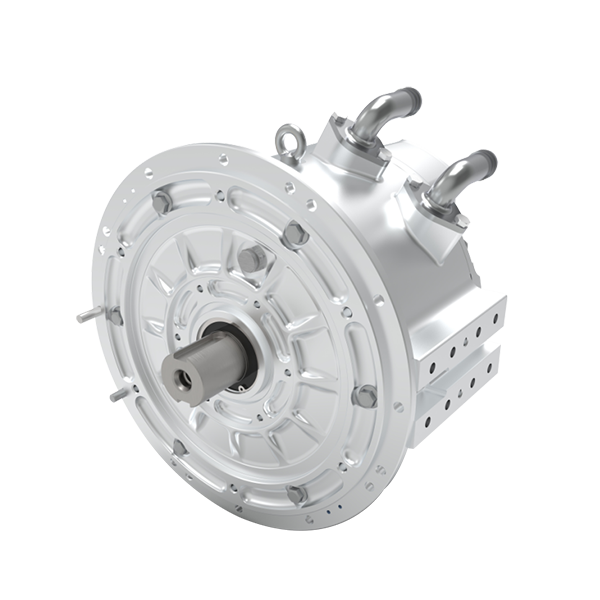
In many facilities today the motor controller sits at the heart of that problem — a single component that still decides uptime, energy bills, and quality output. I see it every week: a mid-size plant replacing a legacy controller only to shave 8–12% off energy use after fine-tuning drive settings and switching to a more responsive inverter setup (real numbers, from recent projects). So why do so many teams keep settling for controllers that feel outdated?
Here’s the scenario: teams under deadline, maintenance budgets tight, and a stack of equipment that’s “good enough” on paper but jittery in practice. The data is stark — small improvements in control precision often translate to large savings in cycle time and waste reduction. That raises a simple but urgent question: which controller choices actually deliver measurable gains, and which are marketing smoke? I’ll walk through the practical trade-offs, share the stumbling blocks I’ve seen on the shop floor, and point toward solutions that balance cost and capability. — funny how that works, right? Next, let’s unpack where traditional approaches fall short and why those gaps still matter.
Part 1 — Why Traditional ac motor controller Approaches Still Let Teams Down
When I first examine a site, the phrase I hear most is: “Our ac motor controller just does its job.” But that passivity masks real flaws. The ac motor controller is often installed with default settings, legacy firmware, or weak integration to the PLC and fieldbus. The result: wasted energy, torque ripple, slow response to load changes, and harder-to-diagnose faults. In short — the system works, until it doesn’t.
What exactly breaks down?
Two technical points stand out. First, limited control algorithms: older controllers rely on coarse PI loops or basic V/Hz control rather than vector control or advanced sensorless estimation. That means uneven torque control under variable loads and higher mechanical stress. Second, poor communications: if the drive doesn’t talk cleanly to SCADA or edge computing nodes, you lose data needed for predictive maintenance. Combine weak drives with underspecified power converters and the machine starts eating energy — and parts.
Look, it’s simpler than you think. I’ve seen teams replace only the encoder and expect miracles. They don’t. The pain is subtle: random torque spikes, marginally longer cycle times, and maintenance calls that don’t show up on trend charts. These are hidden costs that pile up. We need to stop treating controller selection as checkbox procurement and instead evaluate dynamics: control loop type, switching frequency, and compatibility with existing automation. Well, here’s the catch — upgrading isn’t just about buying a newer model; it’s about rethinking control strategy so the drive and machine act as one.

Part 2 — New Principles for Variable Speed Control and What to Compare Next
Moving forward, I want to focus on new technology principles that actually deliver better outcomes. A key asset in that shift is the variable speed controller for ac motor, which lets you match torque and speed to the process rather than forcing the process to match the motor. In practice, that means lower peak currents, smoother acceleration, and fewer mechanical shocks. From a design standpoint, I look for drives that support advanced PWM schemes, high-resolution encoder feedback, and robust thermal management.
What’s Next for practical deployments?
Start by demanding the right communications and control features: deterministic fieldbus support, built-in harmonic mitigation, and clear documentation on torque control modes. In new installations I push for vector control with flux estimation and the option to enable sensorless modes where appropriate. Those features reduce dependency on auxiliary sensors and cut installation complexity. On the software side, open APIs for data export matter — without them you can’t tie the drive into analytics or predictive maintenance. — funny how that works, right?
In summary, choose controllers that are flexible and communicative. That means prioritizing drives with scalable firmware, modular I/O, and clear upgrade paths. I’ve found that these investments reduce mean time to repair and deliver faster ramp-ups when process demands change. Next, I’ll offer concrete metrics you can use to evaluate controllers so you can make decisions that hold up in real conditions.
Conclusion — How to Evaluate and Choose the Right Controller
We started with a simple observation: many factories accept mediocre control because change feels risky. I’ve shared how legacy control strategies produce hidden costs — torque ripple, poor integration, and missed data — and I’ve outlined the modern principles that actually fix those issues. Now, here are three evaluation metrics I use when advising teams:
1) Control fidelity: Does the drive support vector control, adaptive flux estimation, and selectable PWM strategies? These directly affect torque accuracy and motor heating. 2) Integration and diagnostics: Can the controller export real-time data to your SCADA, edge computing nodes, or cloud analytics? Check for deterministic fieldbus support and open APIs. 3) Lifecycle and serviceability: How easy is firmware upgrading, module replacement, and remote support? Consider availability of spare modules and vendor tooling.
I’ll be honest — not every site needs the highest-spec drive. But when you weigh those three metrics, the difference becomes clear in uptime and cost of ownership. I’ve guided plants to solutions that paid back within a year through energy savings and reduced downtime. If you want to compare models more directly, I recommend starting with a test bench of one representative line, measure gains, and scale from there. For practical sourcing and detailed specs, check solutions from Santroll.